


Music as an act of Rebellion: 15 Tracks That Defined Industrial Music
Industrial and Noise music were never supposed to be comfortable.
They were born in a deliberate act of hostility toward the music industry — toward the very idea of music as entertainment. Since its origins in the late 1970s, the genre has evolved, fractured, mutated, and reassembled itself across decades and continents, absorbing everything from noise performance art and political agitprop to drone doom and machine-rhythm minimalism. It remains one of the most intellectually demanding, historically dense, and sonically extreme traditions in recorded music.
This is not a casual playlist. What follows is a chronological cartography of industrial music’s evolution told through 15 essential tracks — each one a document of a specific moment, a specific rage, or a specific rupture. Bands like Einsturzende Neubauten dismantled the architecture of melody itself; Esplendor Geométrico brought fascist-era industrial aesthetics into their very opposite; Sunn O))) stretched the drone into something geological in weight. Together, these tracks constitute a lineage — ugly, confrontational, and unmistakably necessary.
1. Throbbing Gristle – “Hamburger Lady” (1978)
Album: D.O.A: The Third and Final Report of Throbbing Gristle
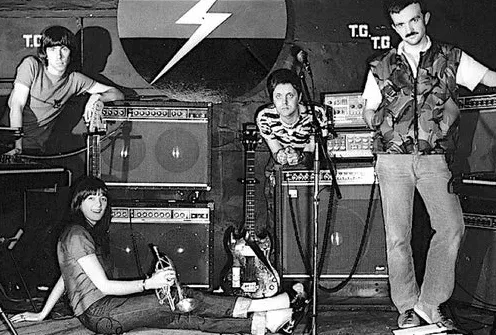
Nothing in popular music before 1978 sounded like this. Recorded by the collective that coined both the term “industrial music” and the label Industrial Records, “Hamburger Lady” remains one of the most disturbing sonic objects ever committed to tape. Genesis P-Orridge, Cosey Fanni Tutti, Peter Christopherson, and Chris Carter assembled a piece inspired by a nurse’s letter describing a severe burns patient — and created music that literally sounds like flesh. Layered synthesizer drones, a sub-bass that feels medical rather than musical, and P-Orridge’s semi-spoken incantations dissolve genre entirely.

Throbbing Gristle (TG) operated out of a former wrapping-paper factory in Hackney, London. They had no interest in rock mythology, no interest in hooks. Their concerts functioned as psychological experiments. “Hamburger Lady” crystallizes what TG meant by industrial: an indifference to beauty, a fascination with pathology, and a commitment to confronting the listener with what culture normally sanitizes. Everything after this track carries its DNA.
2. Cabaret Voltaire – “Nag Nag Nag” (1979)
Single: Nag Nag Nag (Rough Trade, 1979)
Sheffield’s Cabaret Voltaire — Richard H. Kirk, Stephen Mallinder, and Chris Watson — were contemporaries of TG but arrived at the industrial aesthetic through a different door: the Dadaist art movement, tape manipulation, and the political texture of a post-industrial English city where steel mills were dying and unemployment was climbing. “Nag Nag Nag” is their definitive early statement. A sequencer riff that repeats like an assembly-line malfunction, Mallinder’s processed vocals rising to near-hysteria, and an underlying density that feels less like a song than a malfunctioning machine in a condemned building.

The track’s title is perfectly chosen — it is music that nags, that won’t resolve, that refuses catharsis. Cab Voltaire would later evolve toward dance music, but here they are at their most abrasive, their most clearly industrial in both metaphor and sound.

3. SPK – “Metal Dance” (Live on The Tube, November 4, 1983)
Single: Metal Dance (Desire Records, 1983)
Few moments in industrial music history are as instructive — or as strange — as SPK performing “Metal Dance” on The Tube on November 4th, 1983. The Tube was Channel 4’s flagship live music programme, the mainstream British stage where Duran Duran and Wham! appeared. SPK — the Australian/UK collective operating under names including Surgical Penis Klinik and System Planning Körporation — had built their reputation on genuinely extreme material: hospital recordings, shortwave interference, anti-psychiatry agitprop, and noise constructed as a direct assault on institutional power. And here they were, on national television, performing a track that fused industrial metal percussion with synth-pop architecture and something close to a dancefloor pulse.

“Metal Dance” is the hinge point in SPK’s evolution, and its contradictions are precisely what make it essential. Credited to Graeme Revell, Derek Thompson, and Sinan Leong — with production by SPK and Mike Johnson — the track takes the treated metal percussion that defined early industrial practice and submits it to a pop logic: repetition, momentum, a sequencer line that moves rather than corrodes. The result is not a sellout; it is a proof of concept. Industrial rhythm, stripped of the most confrontational anti-music elements, could function as pure kinetic force. It anticipated the industrial-dance crossover by nearly a decade and pointed directly toward what Nine Inch Nails would make commercially viable in the 1990s.
The Tube performance adds a further layer of significance. Watching SPK on a mainstream TV stage — surrounded by the infrastructure of pop promotion — is to watch industrial music’s central tension play out in real time: the movement that defined itself by its hostility to the culture industry, briefly, uncomfortably, occupying that industry’s living room. Revell’s later career as a Hollywood composer (scoring films including The Craft and pi) closes the loop on one of the genre’s most deliberately unresolved ironies.
4. Esplendor Geométrico – “Tarikat” (1986–89)
Album: Tarikat (Daft Records, 1997 — compiled from recordings 1986–89)
No account of industrial music history is complete without confronting Esplendor Geométrico — Madrid’s remarkable contribution to the form, and one of its most politically and culturally charged. Founded by Arturo Lanz, Gabriel Riaza, and Juan Carlos Sastre in 1980 — all three had previously been members of El Aviador Dro — Esplendor Geométrico made music that processed the aftermath of Francoism through pure percussive abstraction. Their aesthetic drew from Russian Constructivism, the Italian Futurist texts of Marinetti (whose phrase “Geometric and Mechanical Splendour” gave the band its name), and the Arabic and North African musical traditions that bled across the Strait of Gibraltar into the Andalusian south.

“Tarikat” — the word refers to a Sufi brotherhood or order of mystical practice — is one of the defining tracks from the period captured on the Tarikat double compilation, assembled from recordings made between 1986 and 1989, partly during Riaza’s time working in Melilla on the North African coast. The track exemplifies what EG called “electronic primitivism”: drum machine rhythms reduced to their skeletal logic, analog synthesizers generating tones that function less as melody than as texture and pressure, and a hypnotic insistence that owes more to repetitive ritual practice than to Western song structure. The North African influence — latent in the percussive cadence, audible in sampled voices and radio fragments from across the Strait — gives the track a geographic and political specificity entirely absent from the Anglo-American industrial tradition. Esplendor Geométrico remain one of the most underrepresented bands in that tradition’s received history. They are also, on the evidence of this track, one of its most necessary.
5. Einsturzende Neubauten – “Tanz Debil” (1981)
Album: Kollaps
“Tanz Debil” (“Feeble Dance”) opens Kollaps, the debut album from Berlin’s Einsturzende Neubauten — “Collapsing New Buildings” — and immediately establishes that we are in the presence of something categorically different from what existed before. Blixa Bargeld’s vocals are all fractured nerve and feral urgency; the “instruments” are construction debris, scrap metal, and power tools. There is a drum kit, technically, but it is buried beneath the sound of industrial infrastructure consuming itself.

Einsturzende Neubauten formed in West Berlin in 1980, amid the hyper-stimulated, apocalyptic cultural atmosphere of a city surrounded by the Wall. Their early records sound like the city itself — not its nightlife or its counterculture, but its concrete, its scaffolding, its ruins. Bargeld understood that if the social contract was breaking down, music should break down too. Kollaps remains one of the most physically aggressive albums in any genre, a record that makes the listener aware of their own skeleton.
6. Test Dept – “Compulsion” (1984)
Album: Beating the Retreat
While Throbbing Gristle theorized industrial, Test Dept. — a collective from South London — lived it. Their percussion-heavy industrial sound, built on oil drums, steel girders, and found materials, was explicitly aligned with the British labour movement. During the 1984-85 miners’ strike, Test Dept. performed alongside striking miners’ wives choirs, participated in benefit concerts, and documented the conflict directly. Their music was not metaphorically political — it was operationally political.

“Compulsion” exemplifies their methodology: relentless percussive assault over a chassis of found-metal sounds, with a severity that conveys exhaustion and determination simultaneously. There are no guitar solos here, no melodic release — just the sound of people who have learned that music can be a tool of resistance rather than a commodity. The track’s intensity does not feel performative. It feels earned.
7. Whitehouse – “On Top” (1980)
Album: Birthdeath Experience
William Bennett’s Whitehouse is the hardest recommendation in this list — and the most important caveat it carries. Power electronics, the sub-genre Whitehouse essentially inaugurated, operates at the outer edge of what can be called music at all: maximalist noise, screamed lyrics engaging directly with violence, degradation, and transgression. “On Top,” from the Total Sex album, is representative of the early Whitehouse approach — pure electronic brutality, vocals processed into something barely human, levels pushed beyond standard recording tolerance.

The debates around Whitehouse have never been resolved. Bennett’s defenders argue for a confrontational art-world tradition (Bataille, Artaud, Sade) and the deliberate provocation of bourgeois comfort. Critics, legitimately, argue that some content crosses into the indefensible. What cannot be denied is the historical influence — virtually every noise and power electronics artist working today has passed through the Whitehouse problem. To omit them is to falsify the record.

8. Coil – “The Anal Staircase” (1986)
EP: The Anal Staircase, 1986.
Peter Christopherson (ex-TG) and John Balance’s Coil occupy a singular position in the post-industrial landscape: theirs was a world of occultism, queer sexuality, psychedelic experience, and a commitment to music as genuinely transformative ritual. And Scatology, their debut album, is a deliberately abject work — the title announces its obsession with waste, with what bodies expel, with what culture refuses to acknowledge. Industrial rhythm collides with tape manipulation and Balance’s sardonic, commanding vocal delivery.

What separates Coil from their predecessors is the presence of something almost warm — a secret love for beauty that leaks through the noise. Their later work would become genuinely transcendent, but here the dialectic between ugliness and grace is still raw. Coil understood that industrial music’s next frontier was interior: not the factory, but the body; not the state, but the unconscious.
9. Nurse With Wound – “Homotopy to Marie” (1982)
Album: Homotopy to Marie
Steven Stapleton’s Nurse With Wound project is a post-industrial music’s great surrealist wing. While others reached for Burroughs and Ballard, Stapleton reached for Max Ernst and Hans Bellmer — the tradition of irrational juxtaposition, of images and sounds assembled by dream logic rather than rational structure. “Homotopy to Marie” is a masterclass in unease: the track builds through piano fragments, tape-manipulated voices, found sounds, and a creeping melodic line that seems perpetually on the verge of resolution and perpetually withholds it.

The Nurse With Wound list — a bibliography of avant-garde and outsider music influences included in early releases — became a touchstone for a generation of collectors and musicians. Stapleton’s work demonstrates that industrial music is also a curatorial practice, a way of listening backward and sideways simultaneously.

10. Godflesh – “Like Rats” (1989)
Album: Streetcleaner
Justin Broadrick’s Godflesh arrived at the end of the 1980s and performed what may be the single most important synthesis in heavy music history: they married the machine-rhythm aesthetics of industrial music to the heaviness of doom and death metal, building tracks around a drum machine rather than a human drummer — a choice that had aesthetic rather than practical motivations. The drum machine doesn’t swing; it doesn’t breathe; it doesn’t have a good night or a bad one. It is absolute. On Streetcleaner, that absolutism is terrifying.

“Like Rats” is a mid-paced obliteration — Broadrick’s guitar processed to the point of losing its organic origin, the bass frequencies turned into blunt trauma, the vocals delivered in a monotone that strips emotion down to pure enunciation. Streetcleaner was recorded in Birmingham, a city that had watched its industrial economy collapse, and it sounds like that collapse — not as protest but as testimony. Godflesh redefined what both industrial and metal could be.
11. Nine Inch Nails – “Wish” (1992)
Album: Broken
Trent Reznor’s Nine Inch Nails represents the point at which industrial aesthetics entered the mainstream — and, appropriately, that is a complicated fact. Broken is the most abrasive thing in Reznor’s catalog: an EP so loud and furious that it functionally alienated casual listeners, combining industrial metal with hardcore tempos and a level of sonic anger that bordered on self-destruction. “Wish” is its propulsive centrepiece — an assault delivered with perfect pop-songwriting instincts buried under enough distortion to make them almost unrecognizable.

The question of whether mainstream industrial is a contradiction in terms has followed NIN throughout their career. What is unambiguous is the technical craft: Reznor’s understanding of production, dynamics, and texture was sophisticated enough to translate the vocabulary of industrial music for arenas without entirely domesticating it. “Wish” won a Grammy. Throbbing Gristle would have considered that the punchline to a very long joke.

12. Pan Sonic – “Urania” (1996)
Album: Kulma
Finnish duo Mika Vainio and Ilpo Väisänen operated as Panasonic (later Pan Sonic for trademark reasons) and produced electronic music of extraordinary severity and precision. Working with analog synthesizers and self-built circuits, their music reduces industrial rhythm to its absolute minimum — not the metal percussion of Neubauten or the drum machines of Godflesh, but pure sine waves and square pulses arranged with almost scientific economy. “Urania” is typical: a single bass tone that holds and shifts almost imperceptibly over a grid of electronic pulses, creating a music that seems to measure something rather than express it.

Pan Sonic represent industrial music’s evolution through European electronic minimalism — they are the bridge between Stockhausen’s electronic studios and the dancefloor, assembled with the dourness of a lab report. Vainio’s solo work and his collaboration with Sunn O)))’s Stephen O’Malley (as s/t/a/r/g/a/z/e/r) further extended this austere but profound tradition until his death in 2017.
13. Merzbow – “Woodpecker No. 1” (1997)
Album: Woodpecker No. 1
Japan’s Masami Akita has released over 400 recordings under the Merzbow name — a figure that itself constitutes an aesthetic statement about excess, accumulation, and the impossibility of absorption. His noise is not incidental; it is a philosophy. Drawing on the Junk Art movements of post-war Japan, on Dadaism, on animal rights activism, and on a rigorous conceptual framework he has articulated in numerous interviews and texts, Akita has made noise music into something approaching a systematic practice.

“Woodpecker No. 1” is relatively approachable by Merzbow standards — which means it is still a sustained, high-intensity barrage of layered noise at volumes that threaten the physical integrity of speakers. But within the noise there is structure, there are decisions, there is an internal logic. Listening to Merzbow requires surrendering the expectation of melody or rhythm and learning to hear texture, mass, and density as primary musical parameters. It is an acquired practice, and it changes how you hear everything else.

14. Sunn O))) – “It Took the Night to Believe” (2005)
Album: Black One
Seattle drone-doom duo Sunn O))) — Stephen O’Malley and Greg Anderson — have spent over two decades pursuing the philosophical implications of extreme low frequency and extreme volume. Their music begins with the guitar drone of bands like Earth and the minimalist traditions of La Monte Young and moves outward from there into something more ritualistic, more physical, more deliberately confrontational of the listener’s relationship with time and space. Black One is their darkest record, and “It Took the Night to Believe” — featuring Wrest of Leviathan — pushes into genuine black metal territory without abandoning the drone-based architecture.

The experience of Sunn O))) is inseparable from the live context — concerts at volumes that are felt in the chest and the sinuses, in rooms filled with dry ice, with robes and ceremony. But “It Took the Night to Believe” translates something of that physicality onto record: a riff so slow it seems to interrogate whether riffs have meaning outside of tempo, a vocal performance of unearthly bleakness, and a production that turns guitar into geological matter. Sunn O))) are what industrial music sounds like when it abandons even the last trace of the machine and reaches for the earth beneath the factory floor.
15. Einsturzende Neubauten – “Haus der Lüge” (1989)
Album: Haus der Lüge
We return to Einsturzende Neubauten for the close — not because the history ends here, but because by 1989 they had completed one of the most remarkable transformations in underground music: from pure noise terrorism to something approaching structured composition, without surrendering a single gram of their essential strangeness. “Haus der Lüge” (“House of Lies”), released in the year the Berlin Wall fell, is a genuinely beautiful song — built on piano, Bargeld’s baritone at its most controlled, and a melody that coexists with the characteristic atonality rather than replacing it.

This is the trajectory industrial music makes possible: beginning in deliberate ugliness, in the rejection of all inherited musical convention, and arriving — through discipline, through conceptual integrity, through refusal to compromise — at something that earns its beauty precisely because it never demanded it. Einsturzende Neubauten, still active and still unclassifiable, demonstrate that the industrial underground is not a genre you graduate from. It is a set of questions about what music is for. Those questions have never been answered. That is the point.
Why Industrial Music Matters
The history traced in these 15 tracks is not a closed archive. Its logic — the confrontation of commodity, the treatment of sound as material rather than melody, the refusal to comfort the listener — has been absorbed into contemporary production practice, experimental sound art, and even mainstream pop in ways that often go unacknowledged. Artists as divergent as Arca, Lingua Ignota, The Body, and uniform directly inherit from this tradition.
Industrial music was always a critique built into sound itself. In an era of algorithmic streaming, aesthetic consensus, and the systematic smoothing of friction from cultural experience, its continued existence is both an anomaly and an argument. These tracks do not stream easily. They do not pair well with anything. They are not background music. They demand, as they always have, the full presence of the person listening — and then they make no guarantee about what that presence will feel like on the other side.
That, finally, is what the underground is for.

Leave a Reply