



RHINO ENTERTAINMENT LLC)
While the city was busy
We wanted to rest
She deiced to drive up to Observatory Crest
We just saw the concert and heard all the best
We went on a ride
We got outside
The sand was hot
She wanted to dance
We went ’round and ’round at Observatory Crest
Thought we saw flying saucers and all of the rest
Pawns in high Spain from Observatory crest
While the city was busy
We wanted to rest
She deiced to drive up to Observatory Crest
We just saw the concert and heard all the best
So the only thing to do
Was to drive up
And watch the city
From Observatory Crest
While the city was busy
We wanted to rest
She deiced to drive up to Observatory Crest
We just saw the concert and heard all the best
So the only thing to do
Was to drive up
And watch the city
From Observatory Crest
(1974)

1. The Uncompromising Visionary
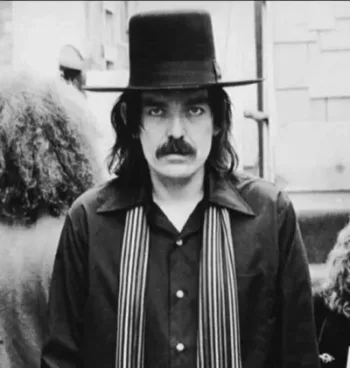
Captain Beefheart (born Don Van Vliet, 1941-2010) wasn’t just a musician – he was a force of nature who detonated the boundaries of American music. Fusing Howlin’ Wolf’s primal blues with Ornette Coleman’s free jazz, Dadaist poetry, and surrealist chaos, he created a “democratic cacophony” that remains one of rock’s most radical experiments. His career spanned violent artistic breakthroughs, cult-like recording sessions, and a controversial legacy that still echoes through punk, avant-rock, and Jazz music today.
—
2. Deconstructing the Beefheart Sound
Beefheart’s music operated like a “dissonant meat grinder” – angular guitars tuned to Indonesian gamelan scales collided with honking anti-saxophone solos, while polyrhythmic drums tumbled like desert tumbleweeds. At the center stood Van Vliet’s four-octave voice, shifting from guttural roars to whispered falsetto within a single phrase.

The Magic Band alchemists – forced into bizarre personas like Zoot Horn Rollo (guitarist Bill Harkleroad) and Drumbo (drummer John French) – translated his synesthesia-driven visions.
As Van Vliet revealed: *”I hear colors for chords… red’s an F, green is D.”* This neurological cross-wiring birthed albums where sound became tangible texture.

—
3. Trout Mask Replica: Myth vs. Reality

The 1969 masterpiece wasn’t just recorded – it was weaponized.
For eight months, Beefheart isolated the band in a California house, enforcing:
- Psychological control: Sleep deprivation, food rationing, banned books
- Musical tyranny: Dictating parts note-by-note, forbidding improvisation
- Creative Stockholm Syndrome: Guitarist Antennae Jimmy Semens (Jeff Cotton) later admitted, *”We were prisoners of genius.”*

While Beefheart claimed he composed it in “8½ hours on an untuned piano,” band memoirs reveal months of collaborative struggle. The result? Twenty-eight tracks of fractured brilliance (“Moonlight on Vermont,” “Pachuco Cadaver”) where blues structures imploded into anarchic beauty.
Decades later, it still tops *Rolling Stone’s “Most Challenging Albums” lists.
—
4. The Bloody Crucible: Career Phases
Captain Beefheart
5. The Zappa Connection: Fractured Brotherhood
Some friendships change us. Others define an entire era of music. The wild, decades-long relationship between Frank Zappa and Don Van Vliet—better known as Captain Beefheart—did both.

Born from a shared love of obscure blues records in the sleepy desert town of Lancaster, California, their bond was as brilliant and bizarre as the music they made. They were teenage outcasts who grew into two of the 20th century’s most formidable musical minds. But their shared path was anything but smooth. It was a volatile story of brotherhood, bitter rivalry, and artistic genius that still fascinates fans today.
Let’s dive into the myths and truths that defined their explosive dynamic.
Did Zappa Really Just “Hit Record” on the Legendary Trout Mask Replica?
One of the most enduring legends in music history is that Frank Zappa produced Captain Beefheart’s masterpiece, Trout Mask Replica, by simply showing up and hitting the record button. It’s a great story, but it’s not the whole story.
The truth is far more complex and speaks volumes about their different kinds of genius.
- Beefheart’s Method Was Madness: The album’s revolutionary sound wasn’t born in the studio; it was forged in a crucible of psychological warfare. For the better part of a year, Beefheart subjected his Magic Band to a cult-like existence in a small communal house. Fueled by little food and less sleep, the musicians endured marathon rehearsals where Beefheart, who didn’t write music in a traditional sense, would whistle or bang out the complex, alien-sounding parts on a piano until they had them memorized. It was an act of sheer creative will and dictatorial control.
- Zappa’s Genius Was Knowing When Not to Touch: Zappa, a meticulous and controlling composer himself, understood that what Beefheart was creating was a fragile, almost feral work of art. His role as “producer” wasn’t to shape the music, but to build a cage strong enough to capture it. He gave Beefheart the keys to his studio, the expertise of his engineers, and a deal on his label, Straight Records. His decision to take a hands-off approach wasn’t laziness; it was a deliberate act of artistic preservation.
So, while Beefheart was the visionary architect behind the album’s sound, Zappa was the essential patron who recognized its bizarre brilliance and had the wisdom to let it be captured in its purest, most untamed form.
Why Did Beefheart and Zappa Accuse Each Other of Exploitation?
Money has a way of souring even the deepest friendships, and the Zappa-Beefheart relationship was no exception. For years, accusations of financial exploitation, mostly from Beefheart, created a rift between them that never truly healed.
It all came down to two completely different worldviews colliding.
- Beefheart’s View: The Starving Artist: From Don Van Vliet’s perspective, it was simple. He was a pure artist pouring his soul into groundbreaking work. He and his band were living in poverty while creating a masterpiece. He saw Zappa as the savvy businessman with the record label who was unfairly profiting from his creative blood, sweat, and tears. To him, the meager pay was a slap in the face.
- Zappa’s View: The Pragmatic Patron: Frank Zappa saw things through the lens of reality. He knew an album as experimental as Trout Mask Replica was commercial poison. He was footing the bills for studio time, manufacturing, and promotion—money he was almost certain to lose. In his eyes, he was giving his old friend the ultimate gift: total artistic freedom and a platform when no one else would. He likely saw Beefheart’s complaints as naive and ungrateful, a complete denial of the financial risk Zappa was taking on his behalf.
Ultimately, both men felt they were right. It was a classic clash between pure artistic passion and the harsh economic realities of the music business, and their friendship became a casualty.
Bongo Fury: The Final On-Stage Reunion and the End of an Era
In 1975, there was a brief, tantalizing glimmer of hope. With Beefheart’s career in a slump, Zappa extended an olive branch, inviting him to tour with his band, The Mothers of Invention. This collaboration was captured on the live album Bongo Fury.
On stage, the old magic was undeniable. Beefheart’s raw, blues-drenched howling and surreal poetry were a perfect foil for Zappa’s tight, complex arrangements. For fans, it was a dream team, a glimpse of what could have been.
But behind the scenes, the old tensions were bubbling up. This wasn’t a partnership of equals; this was Beefheart working as a guest star for Zappa. The free-spirited Beefheart chafed under the discipline of Zappa’s band, famously getting scolded for sketching in a notebook during one of Zappa’s intricate guitar solos.
The Bongo Fury tour was the last time they would ever work together. The fundamental differences in their personalities—Zappa the perfectionist bandleader, Beefheart the untamable force of nature—were too great to overcome.
They remained estranged until Zappa’s death in 1993, leaving behind a legacy of music that pushed boundaries and a friendship story as complex and compelling as any song they ever wrote. They were two creative titans whose shared orbit was destined to be as brilliant as it was brief.
—
6. Post-Music: The Painter’s Revelation
Diagnosed with multiple sclerosis in 1982, Beefheart abandoned music for expressionist painting. His primal desert visions – coyotes, rattlesnakes, and shamanic figures – commanded five-figure prices at Christie’s. As Don Van Vliet, he achieved in visual art what eluded him in music: mainstream acceptance.
—
7. The Underground Legacy
Captain Beefheart’s Enduring Legacy
Captain Beefheart’s influence is vast and subterranean. He paved the way for a generation of artists, challenging conventions and pushing the boundaries of music.
Punk’s Attitude
The raw energy, DIY spirit, and fearless rejection of convention found in punk rock owe a significant debt to Beefheart’s uncompromising approach.
No Wave & Post-Punk
His sonic experimentation, intentional dissonance, and angularity deeply influenced bands like Television, Pere Ubu, The Fall, Sonic Youth, and Talking Heads, shaping the sound of No Wave and Post-Punk.
Alternative & Avant-Rock
Artists such as Tom Waits (especially his 80s shift), PJ Harvey, The White Stripes, Black Midi, and John Frusciante have all drawn inspiration from his unique musical vision, contributing to the alternative and avant-rock landscape.
Art Rock Complexity
Captain Beefheart’s structural innovations and complex compositions continue to challenge and inspire musicians seeking to explore the outer limits of art rock.
—
Epilogue: The Unresolved Contradiction
Was Beefheart a visionary shaman or manipulative tyrant?
The Magic Band’s PTSD and financial ruin clash with the artistic triumph of *Trout Mask*.
Yet his final words to John French haunt: “We made fireworks when the world wanted matches.”
In our algorithm-driven age, Beefheart’s human chaos remains both cautionary tale and North Star – a bloody monument to art’s uncompromising power.
Follow our Pop Culture UFO’s Series

Leave a Reply