

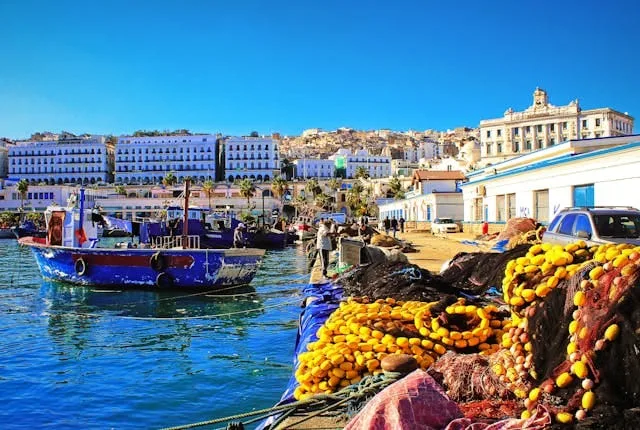

In the shadow of Morocco’s soaring tourism numbers and Tunisia’s beach resorts, Africa’s largest country harbours secrets known only to the most intrepid. Algeria—where Roman cities stand abandoned in mountain valleys, where the Mediterranean kisses fortress walls, and where the Sahara reveals prehistoric art galleries beneath twisted sandstone formations—remains the final frontier for the truly independent traveller.
The Sleeping Giant Awakens
“Algeria unlearned tourism,” explains Djamel Bensalem, head of the newly formed “Algerian Tourism Innovation Collective“. As we chat through my old refurbished laptop, he serves a sip mint tea in a colonial-era café in Algiers. “After independence in 1962, we had a vision to welcome the world. Then came the Black Decade.”
The devastating civil war of the 1990’s erased Algeria from travel itineraries for a generation. While visitor numbers have climbed to 2.5 million in 2023, these figures pale compared to Morocco’s 13 million annual arrivals pre-pandemic. The result is a country where tourism infrastructure remains rudimentary, but where every encounter feels genuine.

“That’s exactly the appeal,” says Sarah, a French tourist behind Mr. Bensalem who has visited Algeria three times during the last 8 years. “No one tries to sell you anything. When someone invites you for coffee in Constantine, it’s because they’re curious about you, not because they want your money.”
A Land of Contradictions
Algeria defies easy categorisation. Its Mediterranean coast boasts beaches that rival the Côte d’Azur, yet lie empty even in summer. The northern cities blend French boulevards with Ottoman kasbahs and modernist architecture. And the Sahara—occupying 80% of the country—contains everything from lush oases to otherworldly rock formations.


What distinguishes Algeria from its neighbors isn’t just the absence of crowds but its scale and diversity. “Algeria contains multitudes,” notes anthropologist Jean-Pierre Cassarino. “It’s Mediterranean and Saharan, Arab and Berber, Islamic and secular, traditional and surprisingly progressive.”
Navigating the Practicalities
VISA REALITY: The byzantine visa process has long deterred casual visitors. While recent reforms have streamlined applications for tour groups, independent travellers should apply at least two months in advance. Most consulates require a formal letter of invitation from an Algerian tour operator or hotel.
For more info: https://www.mfa.gov.dz/services-for-foreigners/entry-visa-to-algeria
SECURITY CONSIDERATIONS: Security has improved dramatically since the early 2000’s. Major cities and popular sites are generally safe, but the southern borders with Mali and Niger remain problematic. The Ministry of Tourism maintains an updated map of advised travel zones. Most visitors report feeling safer in Algiers than in many European capitals.

CURRENCY QUANDARIES: The Algerian dinar cannot be obtained outside the country and credit cards are rarely accepted beyond luxury hotels. Bring euros in cash and exchange at banks or licensed bureaus. The black exchange market exists but dealing in it is illegal and risky, following some opinions, and it’s offering the best rate deals, as per others considerations. My experience: if you can access the black market in safe conditions, do it.
TRANSPORT TRUTHS: Domestic flights connect major cities, but schedules change frequently. The coastal train network is reliable but slow. For the Sahara, hiring a 4×4 with a driver-guide is essential and must be arranged through a registered agency.

The 12 Unmissable Destinations for Independent and Adventurous Travellers
1. Algiers & The Casbah

Wander the labyrinthine alleys of the Casbah, a UNESCO World Heritage site that encapsulates centuries of history from Ottoman palaces to the scars of the War of Independence. The city’s faded grandeur, French colonial boulevards, and vibrant street life offer endless fascination.
2. Tipasa

Roman ruins perched above the turquoise sea, where ancient temples and Christian basilicas bask in the Mediterranean light. Visit early for solitude among the columns.
3. Djemila

In the highlands east of Algiers, Djemila boasts some of the best-preserved Roman ruins in North Africa. The Arch of Caracalla and ancient forum evoke a lost world, often with barely another visitor in sight.
Djemila Romans Ruins Private Tour #AD
4. M’zab Valley

A Saharan marvel, the M’zab Valley is a cluster of five fortified towns (ksour) built by the Ibadites. Their unique concentric architecture and strict traditions create an otherworldly atmosphere.
4 days Private Tour at Ghardaia #AD
5. Tassili n’Ajjer National Park

A surreal landscape of eroded sandstone, prehistoric rock art, and endless desert. Trekking here is an expedition into deep time, with guides leading you to ancient cave paintings and lunar vistas.
7 Days Excursion in the Desert North of Djanet #AD
6. Oran

Algeria’s cultural capital pulses with music, colonial architecture, and Mediterranean energy. Climb to the Fort of Santa Cruz for panoramic views, then stroll the lively Promenade des Anglais.
Oran Vacation packages by Expedia
7. Annaba

This coastal city’s Phoenician and Roman roots are evident at Hippo Regius, where St. Augustine once preached. The Basilica of St. Augustine overlooks ruins and sea.

8. Djurdjura National Park

In the Kabylie mountains, Djurdjura offers wild hiking, deep gorges, and encounters with Barbary macaques. Spring and autumn are ideal for exploring its lush forests and dramatic peaks.
9. Tébessa

Near the Tunisian border, Tébessa’s Roman and Byzantine ruins-including the Temple of Minerva and the Arch of Caracalla-reward the determined traveler.
10. Constantine

The “City of Bridges” is dramatically perched atop gorges carved by the Rhumel River. Its dizzying bridges and Ottoman palaces make for unforgettable urban exploration.
Trip.com – EU Dream Destinations FR – Algeria
11. Taghit

An oasis town where Saharan dunes meet palm groves, Taghit is the “Pearl of the Sahara.” Climb the great dunes at dawn, then explore ancient ksars and Berber traditions.
Find hotels in Taghit from $67
12. Dellys

A charming Mediterranean town east of Algiers, Dellys is known for its Ottoman-era Casbah and relaxed seaside ambiance.

Lonely Planet Algeria (Travel Guide) #AD
This page contains affiliate links.
By clicking on the links and purchasing the product, I will receive a partial commission at no cost to you. All of these products are ones that I fully trust and recommend with my heart. Thank you for your support!
The Algerian Experience: Beyond the Sights
Algeria’s greatest treasure is its people. Travellers consistently remark on the warmth, curiosity, and generosity they encounter-from tea shared in a mountain village to impromptu invitations in city cafes. The absence of mass tourism means each encounter is genuine, and every journey feels like a pioneering adventure.
The Human Connection
Adversity and decades of isolation have preserved a culture of hospitality rarely found in more touristed nations.
“Everywhere we went, people invited us into their homes,” recounts Amelia, a friend, and Argelia’s visitor on five occasions. “In a small town near Annaba, a shopkeeper closed his store to show us Roman ruins nobody visits. He refused payment—he was just proud of his heritage and wanted to share it.”
This generosity extends even to remote areas. Amelia explains: “For them, a guest is a blessing from God. Even in the harshest desert, they share what they have.”
When to Visit
Northern Algeria: April-May and September-October offer mild temperatures and clear skies. Summers can be stifling in cities, while winter brings rain but few tourists.
The Sahara: October-April provides comfortable temperatures. Avoid summer unless extreme heat appeals to you.
Ramadan: Travelling during the holy month (dates vary yearly) presents challenges—many restaurants close during daylight hours—but also opportunities to experience unique traditions and nighttime celebrations.
The Road Ahead
Algeria stands at a crossroads.
Government plans aim to increase tourism five-fold by 2030, with new resorts planned for the Mediterranean coast and luxury camps in the Sahara.
For now, Algeria remains a destination for travelers rather than tourists—those who value discovery over comfort, authenticity over amenities, and genuine cultural exchange over curated experiences. The window to experience this North African giant before wider discovery may be closing, but it remains, for the moment, gloriously open.
TRAVELER’S NOTEBOOK
ESSENTIAL PHRASES:
- Salaam alaikum (Hello)
- Shukran (Thank you)
- La bas? (How are you?)
- Besaha (Cheers/Enjoy your meal)
RECOMMENDED GUIDES:
- Algeria: The Rough Guide – Updated 2024
- Algerian Sahara by Phillip Greenway
- The Casbah of Algiers: A Historical Guide by Omar Fekkar
RECOMMENDED TOURS:
- Assekrem & Hoggar Mountains: 6-Day Sahara Expedition
- Algiers Private Cultural and City Tour with pickup included
- 7 Days 6 Nights Private Trip including 5 cities
Provided by Expedia
VISAS & PERMITS:
Contact the Algerian consulate in your country at least 60 days before travel. Southern desert regions require additional permits arranged through your tour operator.
For more info: https://www.mfa.gov.dz/services-for-foreigners/entry-visa-to-algeria

Leave a Reply