

7 Asian Independent Films of 2025: The Essential Guide Beyond the Multiplex
By VBMGZN Editorial | Last updated: March 2026 | Reading time: 8 minutes
Most streaming platforms show you the same version of Asian cinema: polished, export-friendly, algorithm-approved. But the most important Asian films of recent decades live outside Netflix, Amazon, and festival hype cycles. They circulate quietly — through retrospectives, underground screenings, and word of mouth.
This list focuses on films that matter culturally, not commercially. If you’re looking for comfort viewing, stop here. If you’re looking for cinema that still takes risks, keep reading.
Why Asian Independent Cinema Is Thriving in 2025
The category of Asian independent cinema resists easy definition, which is precisely why it remains productive. These are not art house films made for critics — they are films made by directors working outside the conditions that produce predictable results. No studio notes, no algorithm optimisation, no franchise obligations.
What distinguishes the best of 2025’s Asian independent output is formal ambition combined with genuine social stakes. The films below span crime drama, queer romance, psychological thriller, and contemplative landscape cinema — but they share a refusal to resolve their contradictions into comfortable conclusions. They trust their audiences. That alone separates them from the mainstream.
Underground Asian films are independent or non-mainstream productions from Asia that operate outside major studios and streaming platforms, often challenging dominant narratives, aesthetics, and censorship norms.
The 7 Best Asian Independent Films of 2025
1. Santosh (India / UK / France / Germany) — The Anti-Police Procedural Redefining Crime Cinema

Director: Sandhya Suri | Genre: Crime Drama, Social Commentary
Forget the conventions of the police procedural. Santosh follows a young widow who inherits her husband’s job as a constable in rural India. When a girl’s murder pulls her into an investigation, the film becomes a sustained and devastating critique of systemic corruption — less interested in solving the crime than in mapping the institutional conditions that make justice structurally impossible.
Shahana Goswami delivers a career-defining performance, navigating a character whose moral education is the film’s real subject. Suri’s direction is slow-burn and precise, building genuine tension through accumulation rather than incident. The authenticity of its portrayal of India’s justice system is not incidental — it is the film’s argument.
Santosh confirms something that audiences paying attention already know: Indian film production has diversified well beyond Bollywood, and the most interesting work coming from the subcontinent right now operates in this register of social realist inquiry. See also our coverage of Payal Kapadia’s All We Imagine as Light
2. Viet and Nam (Vietnam / Philippines / France) — A Dreamlike Love Story That Transcends Boundaries
Director: Trương Minh Quý | Genre: LGBTQ+ Drama, Magical Realism

Viet and Nam follows two young coal miners and lovers in Vietnam. When Nam considers the risk of illegal migration for a better life, their relationship faces its ultimate test. Trương Minh Quý works in a mode that refuses the separation of the political and the intimate — the film’s gritty industrial setting and its dreamlike visual sequences exist in deliberate tension, neither resolving into the other.
The tenderness of its portrayal of queer love in a masculine world is remarkable for Vietnamese cinema, where LGBTQ+ representation remains rare and fraught. The film explores memory, loss, and desperate choices through imagery rather than exposition, trusting the viewer to hold its ambiguities.
3. Teki Cometh (Japan) — Modern Paranoia Meets Classic Japanese Wit
Director: Daihachi Yoshida | Genre: Psychological Thriller, Dark Comedy

Winner of Best Director at the Asian Film Awards 2025, Teki Cometh is based on the work of legendary novelist Yasutaka Tsutsui [suggested link: Yasutaka Tsutsui — Wikipedia or literary profile], whose fiction has long occupied the territory where social satire and existential dread converge.
A retired professor’s quiet life collapses when a cryptic computer message triggers a paranoid spiral about surveillance and identity. Yoshida’s direction achieves a difficult balance — the film is genuinely funny and genuinely unsettling, often simultaneously. Its commentary on technology and privacy never becomes didactic because the absurdism keeps undercutting the thesis at precisely the right moments. It is the kind of film that plays at Busan and TIFF because it demands repeat viewing. First viewing produces recognition; second viewing produces theory.
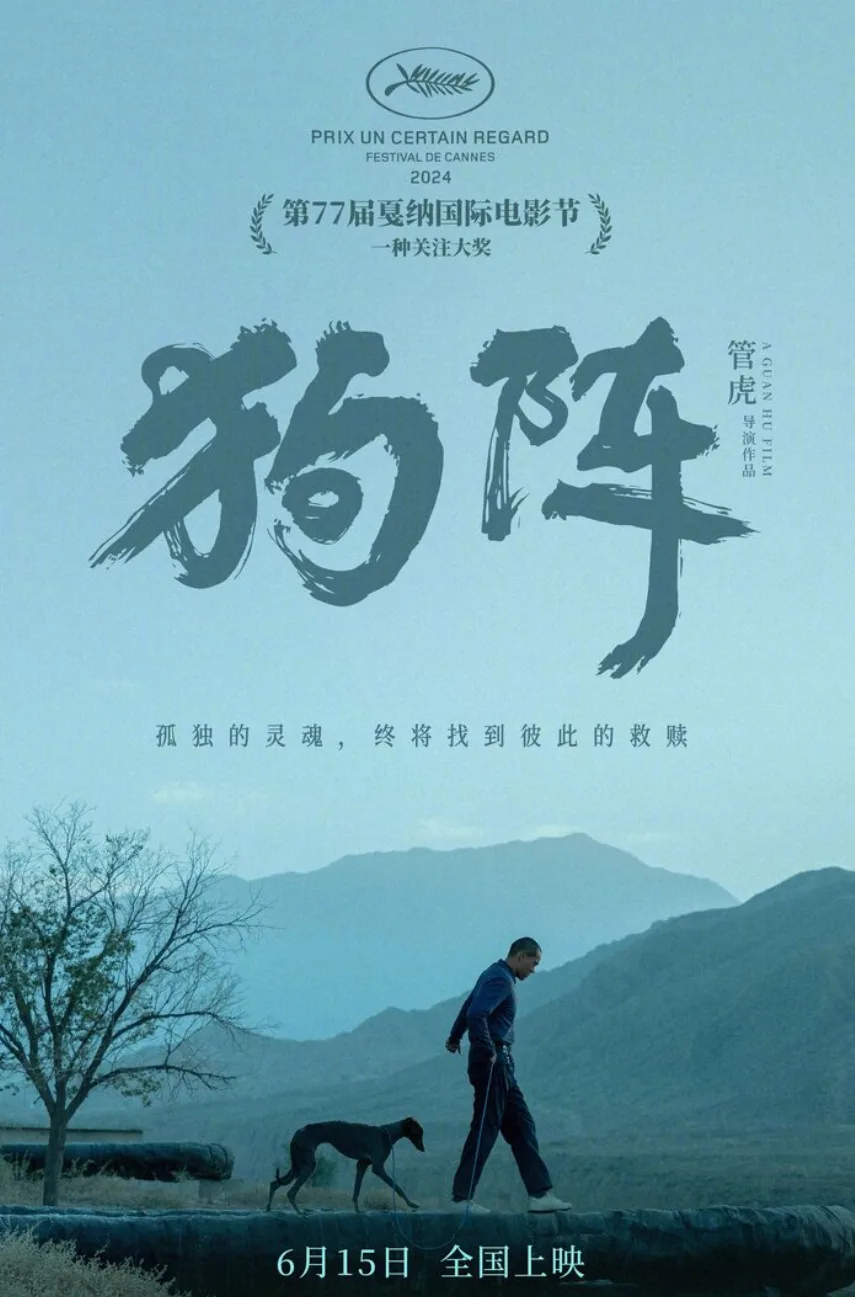
4. Black Dog (China) — Finding Humanity on Society’s Margins
Director: Guan Hu | Genre: Social Drama, Character Study

Set against the backdrop of the 2008 Beijing Olympics preparations, Black Dog follows a former stuntman, fresh from prison, who returns to his desolate hometown with a job clearing stray dogs. His unlikely bond with one stubborn black dog becomes the film’s central metaphor — for redemption, for the casualties of rapid development, for the connections that persist at the margins of a society in transformation.
Eddie Peng’s performance is the film’s anchor: raw, physical, and capable of conveying interiority through restraint. Guan Hu’s cinematography is unflinching in its depiction of the spaces that China’s modernisation has left behind. The universal themes — connection, second chances, the weight of the past — are earned rather than asserted.
5. Stranger Eyes (Singapore / Taiwan / France / USA) — A Technology Thriller That Gets Under Your Skin
Director: Yeo Siew Hua | Genre: Neo-Noir, Psychological Thriller

After their baby is kidnapped, a surveillance expert spots a boy who might be his missing son and begins obsessively tracking the child’s new family through hacked webcams. Stranger Eyes takes the infrastructure of digital surveillance — the kind that has become so normalised it barely registers as intrusion — and makes it viscerally uncomfortable again.
Yeo Siew Hua’s neo-noir cinematography gives the film a stylish surface that the content systematically corrodes. The slow-burn tension builds toward something genuinely unbearable. Its commentary on privacy in the digital age works because it never reduces to polemic — the film implicates its audience in the voyeurism it depicts.
6. Papa (Hong Kong) — A Father-Son Story with Genuine Heart
Director: Kelvin Chan | Genre: Family Drama

Sean Lau won Best Actor at the Asian Film Awards 2025 for his performance here — a distinction that understates what he achieves. His portrayal of a debt-ridden single father navigating life’s pressures with his son is built on restraint and precision, never reaching for emotion that the material hasn’t already earned.

Papa is quietly powerful precisely because it avoids melodrama. It focuses on realistic family moments — small decisions, unspoken negotiations, the texture of daily life under financial strain — and finds in them something ultimately hopeful without dishonestly resolving the circumstances that generate the hardship. It is the kind of film that the category of “family drama” rarely produces.
7. Living the Land (China, 2025) — A World That Changes Very Fast
Director: Huo Meng | Genre: Drama

Screened in competition at the 2025 Berlin International Film Festival, Living the Land follows a nuanced narrative examining the relationship between humanity and environment in contemporary rural China. Huo Meng’s approach is contemplative — the film takes seriously the challenges and beauty of rural life as it navigates tradition, modernisation, and personal resilience.
Early responses from Berlin emphasised the cinematography’s capacity to make landscape carry narrative weight — in the tradition of directors like Bi Gan (Long Day’s Journey Into Night) and Hu Bo (An Elephant Sitting Still), both of whom demonstrated that Chinese cinema’s most powerful register is often its most patient one.
Where to Watch Asian Independent Films in 2025
The most reliable single platform for this category is MUBI [suggested link: MUBI — mubi.com], which has built its catalogue specifically around arthouse and festival cinema and carries more of the titles on this list than any other streaming service. Criterion Channel is the secondary option for titles with North American distribution.
For theatrical access, the festival circuit remains the primary route to first contact: Cannes Directors Fortnight, Busan International Film Festival [suggested link: BIFF — biff.kr], Tokyo International Film Festival, and the New York Film Festival all programme Asian independent cinema consistently and with genuine curatorial intelligence. Streaming availability typically follows three to six months after festival premieres.
Some titles will appear in Amazon Prime Video or Apple TV international collections, but availability varies significantly by region. Independent theatres, art house cinemas, and university film programmes remain important exhibition contexts for the films that receive no mainstream distribution at all.
For those new to this territory: begin with Papa for accessible family drama, then move to Santosh for social realist cinema that requires more engagement. Black Dog is the most immediately cinematic entry point for viewers accustomed to character-driven American independent film.
Where to Start with Asian Independent Cinema
For experienced film lovers: Viet and Nam rewards patience with its poetic register. Stranger Eyes offers psychological complexity that escalates deliberately. Teki Cometh works best for viewers already familiar with Japanese genre cinema and its relationship to social satire.
The broader context for all of these films: our coverage of the 2025 Asian festival winners and breakthrough auteurs and the best of Asian cinema in 2024.
What Makes Asian Independent Cinema Different from Hollywood
The structural difference is not aesthetic — it is conditional. Hollywood independent cinema operates within an industrial ecosystem that still shapes distribution, financing, and audience expectation. The films on this list were made outside that ecosystem entirely, in conditions where the commercial imperative was either absent or actively in opposition to the work.
The result is films that move at their own speed, hold their ambiguities rather than resolving them, and treat their audiences as participants rather than consumers. That is not a value judgment about Hollywood. It is a description of what different conditions produce.
Frequently Asked Questions About Asian Independent Films in 2025
What is the best Asian independent film of 2025? Several Asian independent films have stood out in 2025 for their originality and festival recognition. This list covers seven essential picks spanning Japan, China, India, Vietnam, Singapore, and Hong Kong — each offering something mainstream cinema structurally cannot.
Where can I stream Asian independent films in 2025? MUBI is the primary platform, specialising in arthouse and festival cinema. Criterion Channel is the secondary option. Regional platforms including Viki and WeTV carry some titles, and Amazon Prime Video and Apple TV carry others as limited releases following festival runs. Availability varies significantly by region.
What are the hidden gem Asian films of 2025? The hidden gems on this list include Viet and Nam for its rare portrayal of queer love in Vietnamese cinema, Stranger Eyes for its formally sophisticated take on digital surveillance, and Living the Land for landscape cinema in the tradition of Bi Gan and Hu Bo. All screened at major festivals but are unlikely to receive mainstream streaming distribution.
Which Asian film festivals should I follow in 2025? Busan International Film Festival (BIFF) is the most important dedicated platform for Asian cinema discovery. Tokyo International Film Festival, International Film Festival Rotterdam, and the Asian selections at Cannes and Berlin consistently surface the most significant new work before wider release.
Related reading: — The Essential Asian Cinema of 2025: Festival Winners and Breakthrough Auteurs — The Best of Asian Cinema in 2024 — 10 Asian Classic Films That We Should See Once in Our Life
Leave a Reply